Welcome to the home page of Friends of Herring River. Within this site you will find the latest information about the restoration of the Herring River in Wellfleet and Truro, Massachusetts, including links to background information, scientific documents, maps and other useful data concerning the project.
This website will be updated regularly, so check back often. The site was updated on November 9, 2011 to add a paper on frequently asked questions - see News.
Please contact us with any questions you may have.
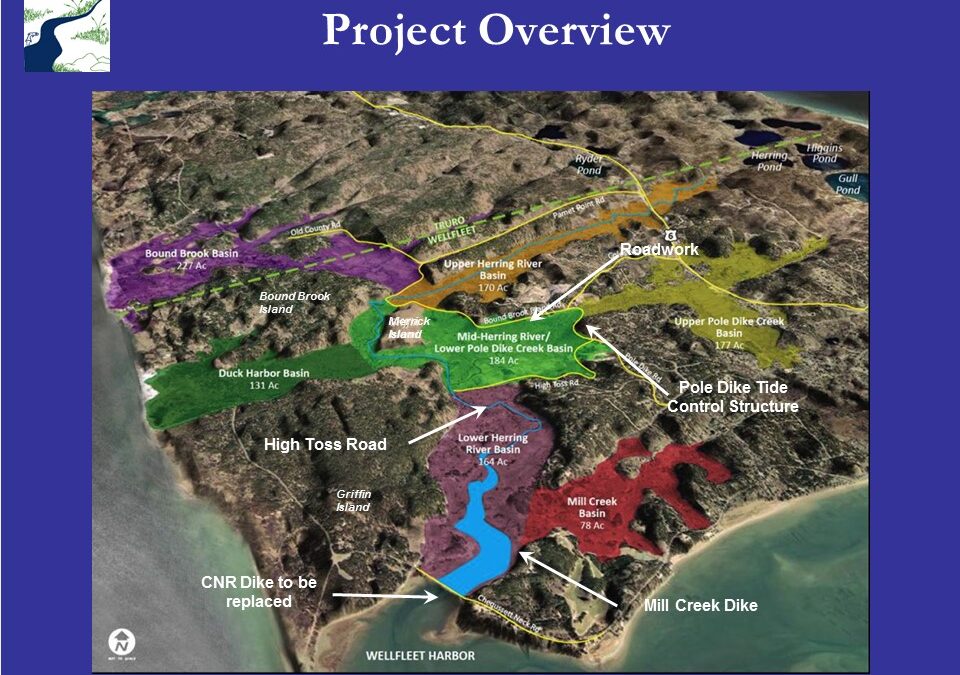
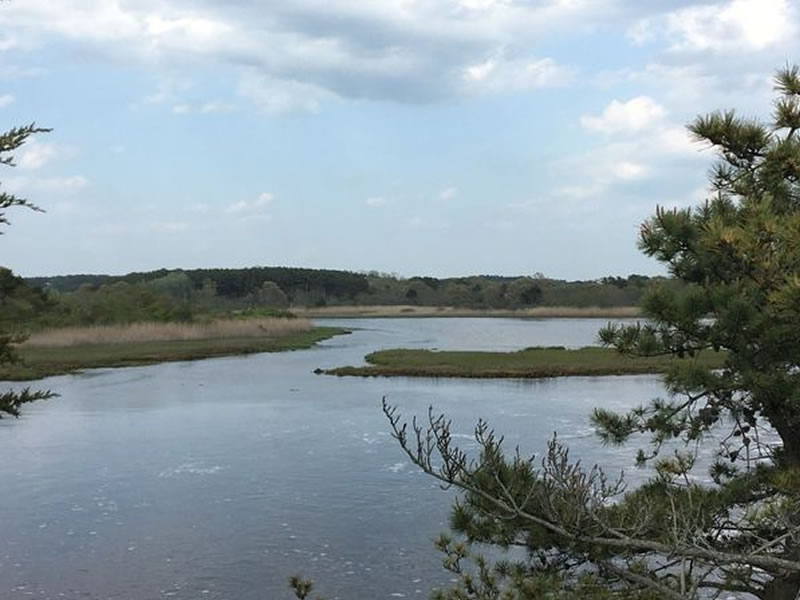
A group of citizens came together in the summer of 2008, bound by a shared commitment to the restoration of one of the largest impacted estuaries in New England: the Herring River Salt Marsh. When fully restored, the estuary will cover approximately 1100 acres.
Friends of Herring River was launched formally at the State of the Wellfleet Harbor Conference on November 15, 2008 and is a tax exempt organization under Section 501(c)(3) of the IRS Code. All contributions are deductible to the extent allowed by law.
Friends of Herring River is independent of the Herring River Restoration Committee but works closely with the Committee to promote the restoration of the Herring River Estuary.
The mission of the Friends of Herring River is straightforward: to promote the restoration and ongoing environmental vitality of the Herring River Estuary.
The key components of the mission are:
Through personal contacts, the electronic newsletter, meetings and conferences, Friends of Herring River has been reaching out to the towns of Wellfleet and Truro, individuals and organizations throughout the Cape and beyond in order to strengthen and grow community-wide support for the project.
Over the longer term, once the construction phase of the project is completed, it is anticipated that Friends of Herring River will continue as a non-profit organization promoting the ongoing environmental vitality of the salt marsh.
The Herring River Restoration Committee was established in December 2007 through a Memorandum of Understanding among the National Park Service and the Towns of Wellfleet and Truro. Under the provisions of this MOU the primary purpose of the Committee is to prepare the Environmental Impact Statement and Environmental Impact Report related to the restoration of the Herring River Salt Marsh.
The Herring River Restoration Committee with the assistance of APCC is currently managing the Joint Environmental Review Process under the National Environmental Policy Act (NEPA), the Massachusetts Environmental Policy Act (MEPA) and the Cape Cod Commission Act.
The project alternatives, recommended preferred alternative and mitigation strategies will be described in the Draft Environmental Impact Statement/Report (EIS/EIR), scheduled for public review in the fall of 2011.
Click here for an estimated timeline and key elements of the integrated environmental review process.
Click here to access more information about the Herring River Restoration Committee.
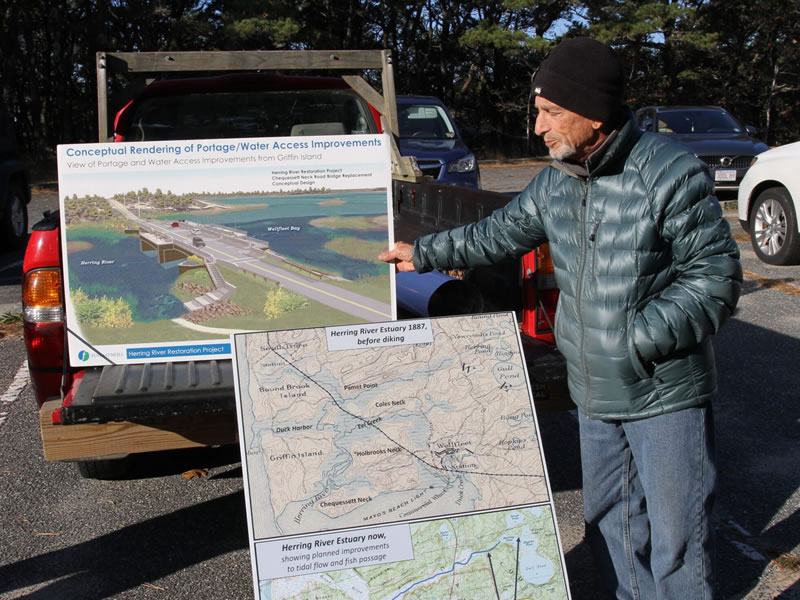
A Photo Gallery on this site is a work in progress. If you have photos of the Herring River from different vantage points and would like to have them posted on our website please get in touch with us. We are particularly interested in historic photos and stories of the river and salt marsh of years gone by. We've added historic maps dating back to 1887.
Click here for early century photos of the dyke and estuary courtesy of the Wellfleet Historical Society.
Click here to view the August 2011 National Park Service newsletter on the project and alternatives under study.
Frequently Asked Questions
Estuary Painting
Local artist Peter Watts has completed an oil on canvas painting of the estuary as we expect to see it when the restoration is complete. He exhibited it at our annual meeting. Peter spoke to the audience on his painting and signed prints that were sold for $50. The funds will be used to support the outreach activities of Friends of Herring River. Thank you Peter.
If you wish to purchase a signed print please contact us at info@friendsofherringriver.org

1906 Engineering Report
Click here for a fascinating report by H.T. Whitman and Channing Howard, civil engineers, on the matter of diking out and draining the estuary of the Herring River and its tributaries. It's particularly interesting in view of the current studies on the implications or restoring tidal flow in the estuary.
What Were They Thinking?
Click here for an excerpt for a forthcoming book on environmental history of Cape Cod by John Cumbler, University of Louisville Professor of History and Wellfleet resident. It provides further insight into the decision to cut off tides from the Herring River Estuary back in the early part of the last century.
2012 Planned Activities
If at any time you have suggestions for an event or activity, please contact us at info@friendsofherringriver.org